Best Time to Visit Angkor: Cool Season, Heat and Rain Honestly
5 min read
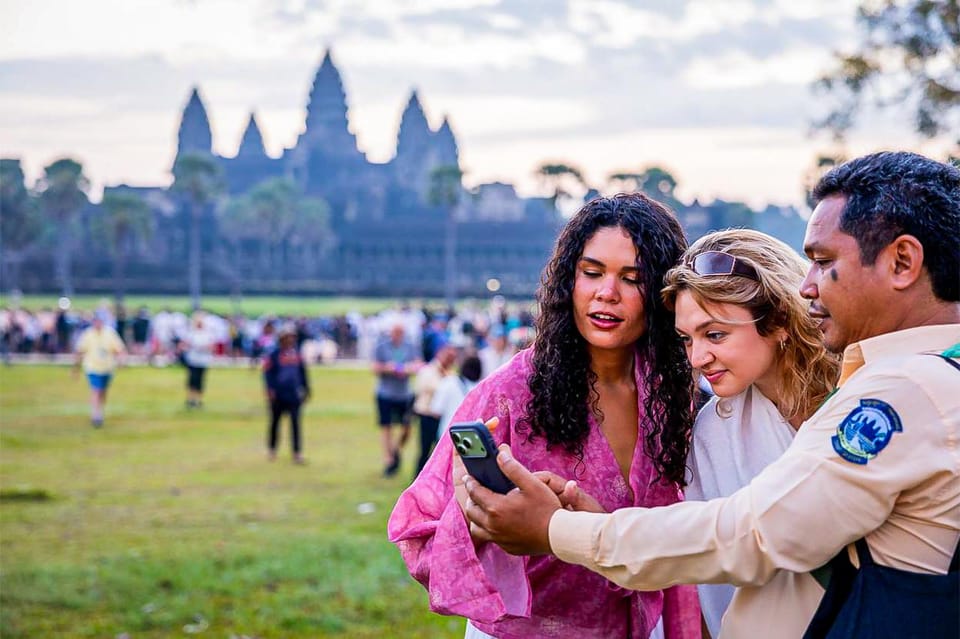
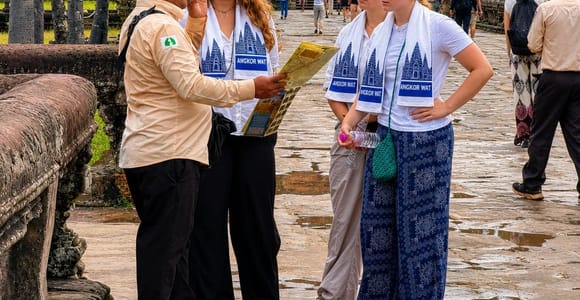
The short answer: November to February is easiest for most visitors, but the best compromise is often late November or February: less punishing heat than March and April, and fewer rain interruptions than the wettest months. Whatever the month, the Angkor Wat Small-Group Sunrise or Sunset Tour is the simplest first-day booking, from €13.36, 8–9 hours, rated 5.0/5 from 12,769 reviews. The 37 US$ one-day Angkor pass is not in the price, groups are capped at 15, and the booking page lists the tour as not suitable for children under 4 or people with back problems; check the booking page for which meals are covered.
Cool season: easier, busier
The dry, cooler stretch makes long temple days possible. It also brings the largest crowds and dusty roads. Sunrise is not crowd avoidance; it is a photograph taken with many other people. Start early, but use the middle of the day for lunch and shade rather than collecting temples mechanically.
Hot season: shorten the day
March and April are the months when a full-day itinerary looks better on paper than it feels on sandstone. A sunrise start and an early finish are more sensible than adding sunset to the same day. Air conditioning between stops helps, but it does not cool the galleries or steep steps.
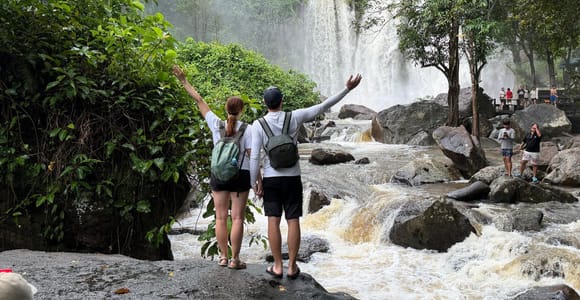
Rainy season: greener, not ruined
Rain usually changes the rhythm more than it cancels a day. Stone becomes slippery and a heavy shower can stop a visit temporarily, while moats, trees and rice fields are greener. Carry a light rain layer and follow closure signs on site; do not assume every staircase remains open.
Check availability and prices for the Angkor Wat Small-Group Sunrise or Sunset Tour
Our recommendation
Choose late November through February if comfort matters most. Choose the rainy season if you accept interruptions in exchange for green scenery. Avoid building an 11-hour temple day in April. For a first visit, book the small-group sunrise tour and keep the afternoon flexible.