Siem Reap City Walk: What Connects the Old Market, Pub Street and the River?
5 min read
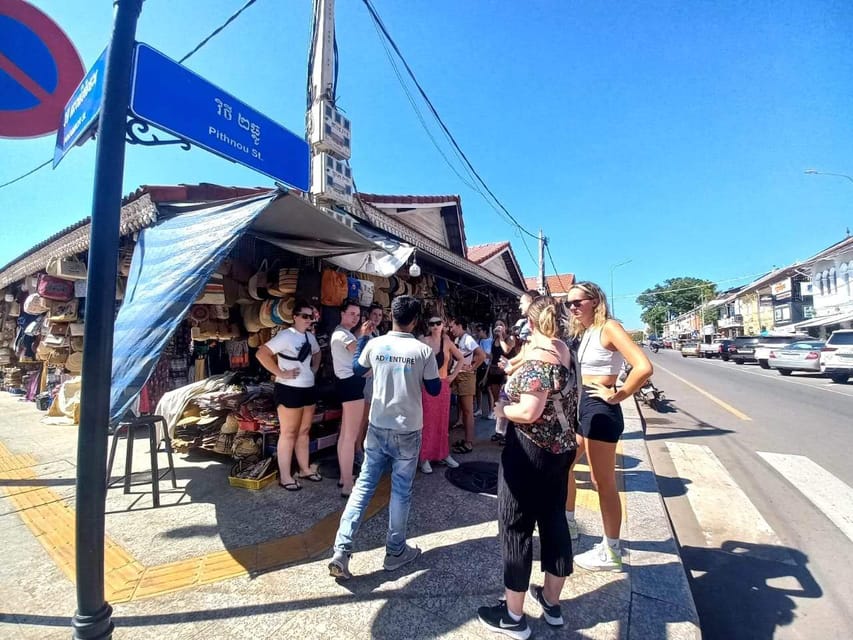
The short answer: walk the Old Market, the lanes around Pub Street and the river as one compact circuit, not three separate sights. For a first morning in town, book the Siem Reap City Walking Tour: it lasts 2 hours, starts at €5.35 per person and has 4.6/5 from 644 reviews. It is the better purchase when you want local stories and orientation. Walk independently if you mainly want food, photographs and the freedom to stop whenever a stall interests you.
Central Siem Reap is easy to misunderstand after a day at Angkor. The temples are spread across a vast archaeological park; the town centre is a small, lived-in grid. The useful walk is not about collecting landmarks. It shows how the market, nightlife streets and river relate to one another, so you know where to return after dark.
Start with the Old Market
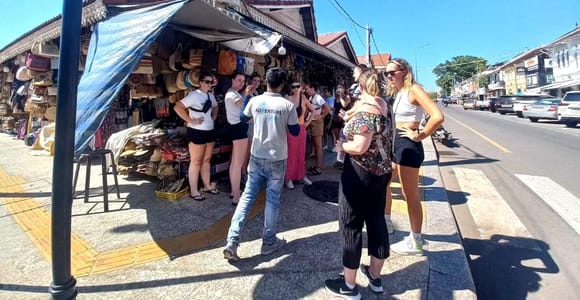
Psar Chas, usually called the Old Market, works best as the anchor. Its outer edges cater visibly to visitors, while the food and household sections reveal the market’s everyday function. Move slowly enough to notice the change rather than treating it as a souvenir stop. Narrow aisles, deliveries and wet patches make this a poor place to hurry with luggage.
The guided walk costs €5.35 per person and lasts only 2 hours. The listing promises local stories and helpful insights for making the most of your visit. That is precisely its value: someone explains what you are looking at, then leaves the rest of the day free.
Check availability and prices for the Siem Reap City Walking Tour
Pub Street is a junction, not the whole city
Pub Street makes sense as a navigation point. In daylight you see restaurant terraces, signs and service traffic; after dark it becomes the loudest part of the centre. If nightlife is not your reason for visiting, cross it and explore the smaller surrounding lanes. They connect the market area with cafés, shops and quieter places to sit without committing your evening to the busiest strip.
Families should do this section earlier. The route is short enough for a child who has no patience left after a temple day, but the late-evening noise and crowd are not the attraction for every family. A stroller faces kerbs and uneven pavement rather than a continuous smooth promenade.
Use the river to reset the walk
From the market district, turn towards the Siem Reap River. The river gives the centre a clear north–south line and offers visual breathing room after the enclosed market lanes. Cross a bridge, walk one bank and return on the other instead of retracing the same shops. This makes a coherent loop and keeps the outing different from an evening spent eating around Pub Street.
Do not add an arbitrary number of stops. Two attentive hours suit this centre better than an exhausting checklist after Angkor. Carry water, watch for traffic at crossings and choose footwear for broken paving rather than for a polished urban promenade.
Guided or independent?
Choose the guide on your first day if names and street patterns tend to blur together, or if you want a local account rather than signs and map pins. Skip it if shopping is your main aim or every food stall is likely to become a long stop. At €5.35, the tour does not need to replace independent wandering; it can be the orientation before you come back for dinner.
My recommendation is the 2-hour Siem Reap City Walking Tour on the first morning or late afternoon, followed by an unhurried return to whichever market lane or riverside stretch caught your attention.